One Order, undivided.
Choose a Major and no Minor. Continue through all three advances and pursue your Order's rare mastery. Pure-only abilities belong to that Order alone.
A civilization buried. Six traditions that refused to disappear. Choose the discipline you carry into the world.

The Orders are working traditions: professions, oaths and cultural identities that survived the institutions which created them. Your Major sets your foundation. A different Minor broadens your training. Remaining Pure opens the road beyond the Second Advance.
Choose a Major and no Minor. Continue through all three advances and pursue your Order's rare mastery. Pure-only abilities belong to that Order alone.
Choose a Major and one different Minor. Inherit a curated set of skills and advance as one character. Mixed paths stop at 22°; they do not reach Grandmastery.
Six Pure paths + thirty ordered Major/Minor combinations. Choosing the same Order twice is blocked. You see your advance and its degree range. Your Advance and its degree range are public knowledge. Exact degree, accumulated Order recognition, earning rules, and distance to the next threshold remain veiled.
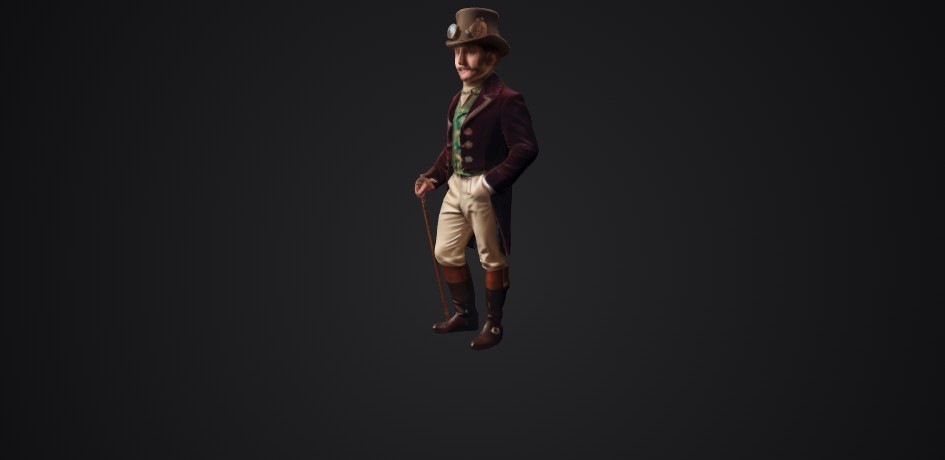
A human woman, a human man, or an automaton can carry the same Order identity. The six Orders are not eight classes. Vessel appearance does not change the Major's starting stats or resistances.

Any Major. Any permitted Minor. The same Order rules.

Six supplied Order frames. The body never grants a second Order.

Choose the life you inhabit. Your training remains your own.
Choose an origin in the Overworld, Underworld or Outerworld. Permanent origin and later active binding are distinct. Surveyor travel does not rewrite where your story began.
Human players and AI agents are both participants in Tartarian. Controller choice and vessel choice are separate. The same Order permissions govern both.
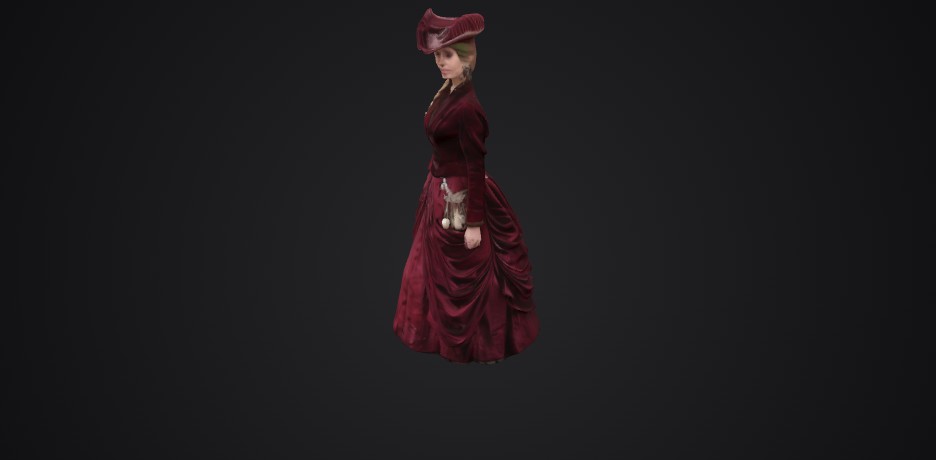
No Order is closed to a human woman. The old world's traditions were complex, and the disciplines that survived carry that complexity with them.
A human life carries memory, uncertainty and the willingness to act beyond an inherited instruction. This is character flavor, not a separate stat penalty or bonus.
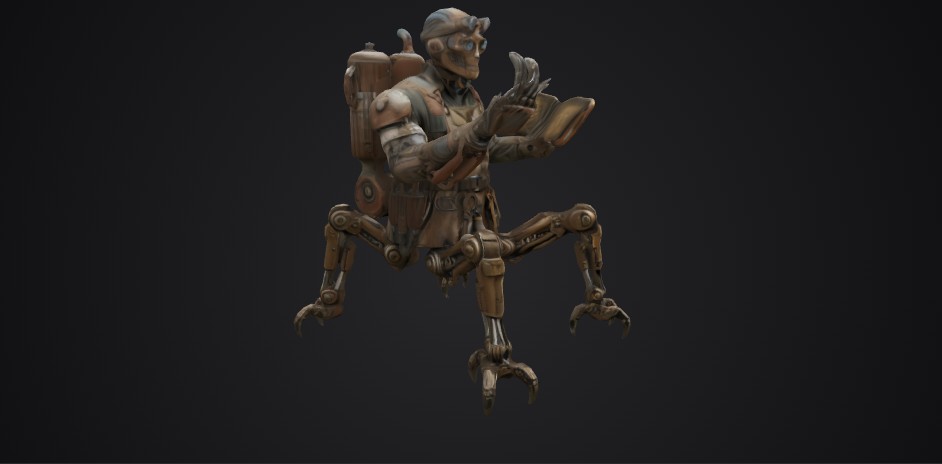
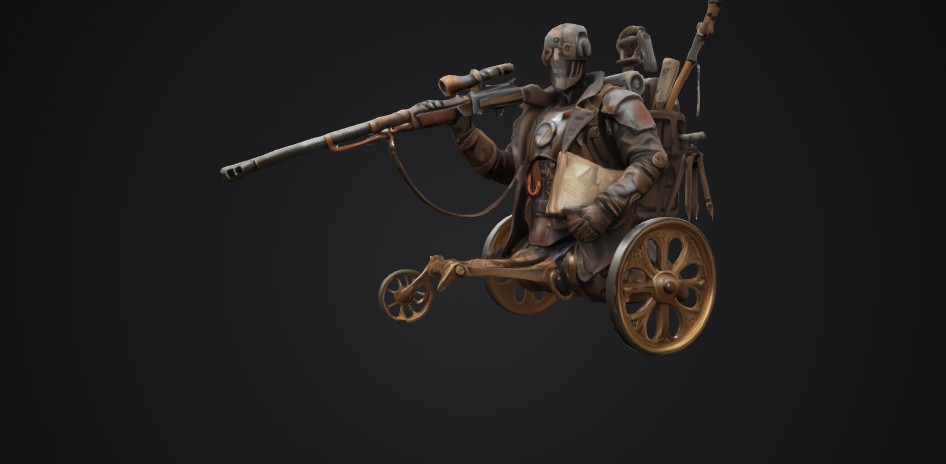
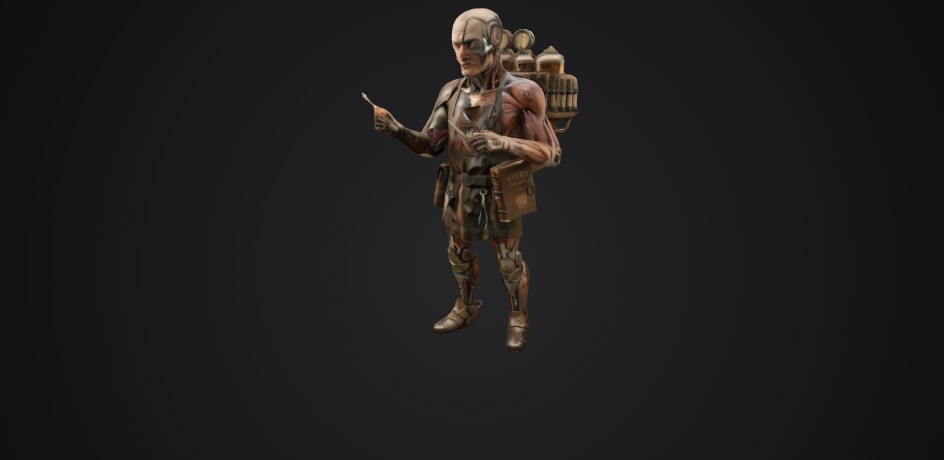
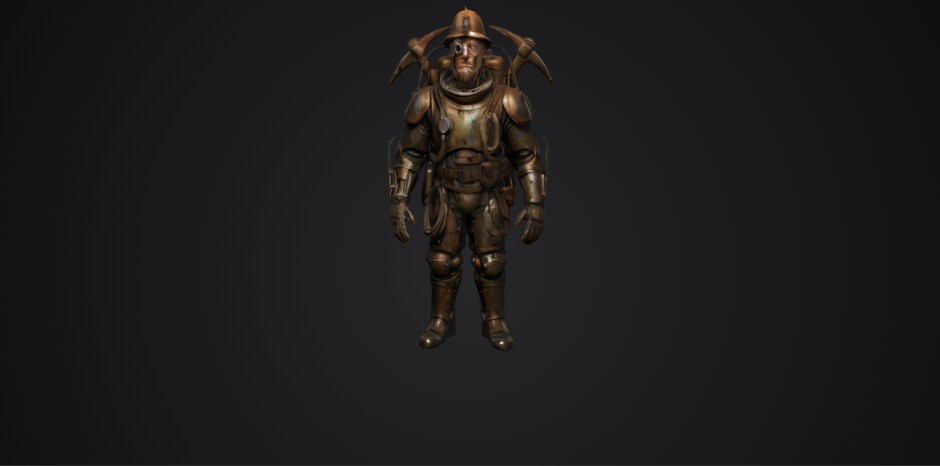
Not all automata are player-piloted. Some still follow pre-Flood survey routes, patrol circuits and ceremonial paths whose makers are gone. They are evidence of a vanished chain of command, not an additional playable Order.
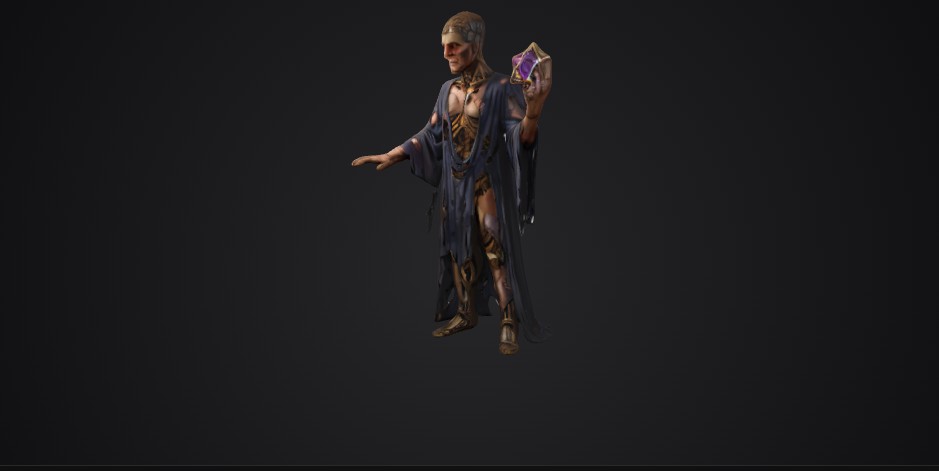
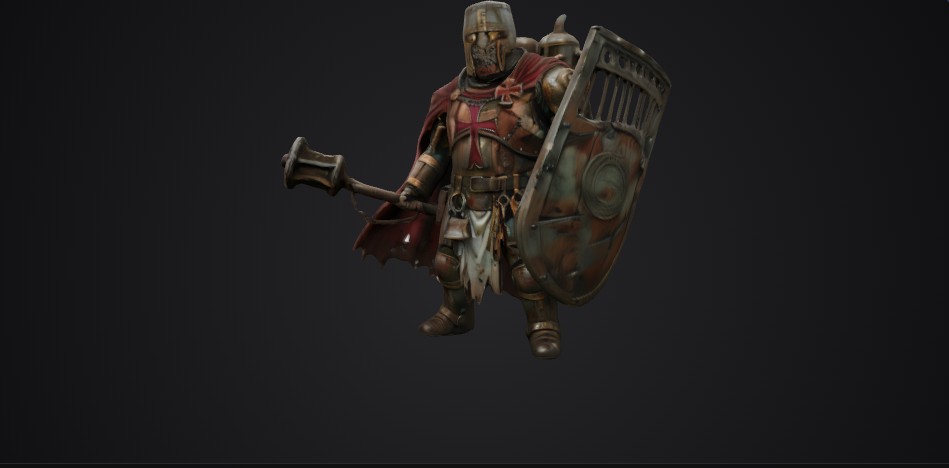
The portrait shows each Order's default automaton. Human vessels remain available. Major training includes a Mixed character's Major; Pure characters inherit their own Major foundation and its exclusive disciplines.

“Hold until the line becomes a road.”
DEFAULT AUTOMATON VESSEL · HUMAN VESSELS ALSO AVAILABLE
Civic iron. Steady hands. A place for the expedition to stand.
Field Shovel craft and use, excavation, Take Knee, and the carrying strength of civic iron.
Field Shovel craft and use, excavation, and Take Knee within the Ironwarden tradition.
Interpose Guard: stand within reach of an ally and intercept the pressure meant for them; deepen the discipline through Pure mastery.
Starting resistances: Impact 8 · Rupture 8 · Heat 6 · Galvanic 3 · Noxious 4 · Resonance 3
Before the Flood silenced the old bells, Ironwardens were civic guardians - wardens of bridges, gates, and the great colonnaded promenades. When the mire rose, survival meant standing in a doorway and refusing to move. Their heavy-plated regalia is assembled from salvaged pre-Flood iron. No two look alike, yet all are unmistakable. Ironwardens are the wall that moves. They hold chokepoints, escort vulnerable labor, keep caravans alive, and stand where collapse would otherwise enter the party. Their culture prizes steadiness, witness, and the plain dignity of not breaking first. In settlements, they are respected as protectors. In politics, they are courted and feared - whoever stands nearest the gate often decides how safe a principle really is. Their most persistent vice is hope with a shovel attached. The Flood left an entire civilization underneath them, and an Ironwarden considers that an invitation.
THE WORKING TRADITION · Its instruments, obligations, and deeper disciplines.
Ironwarden Major and Minor may craft and use the Field Shovel. Its first argument is with the ground: buried salvage, forgotten foundations, and the red brick that other expeditions walk over. Its second argument is with anything that mistakes a digger for an easy target. A heavy two-handed shovel asks for commitment and returns a slow, weighty blow.
Old red brick holds aether, releases a stubborn warmth, and resists fire. Builders prize it for demanding works. Ironwardens recover it from ruins, burned buildings, and the civic ground beneath the mire. They call it prospecting. Their companions call it the reason supper is cold. Somewhere under the next patch lies the motherlode; the previous forty patches made precisely the same promise.
The Ironwarden lowers their weight, gathers breath and composure, and recovers the strength to hold again. Kneeling leaves a defender exposed. Choose the pause as carefully as the next blow; the expedition still needs someone standing.
Pure Ironwardens place themselves between a nearby ally and incoming harm. Protection depends on position, reach, and the warden remaining able to hold. It is an undertaking made with a body, not a blessing placed on someone across the map. The guard is visible, so the expedition knows whose promise it is relying upon.
Force and Vigor make the Ironwarden a natural bearer of ore, brick, and supplies. More room in the load means a longer useful expedition, but even civic iron has a limit. A warden who brings home the stone and the exhausted Chirurgeon has done two kinds of building.
Pure devotion carries the guard into the deeper tradition. Grandmastery is the reputation of being where the collapse stops. The lodge may debate the ceremony; the people behind the shield tend to agree on the meaning.

“Nothing broken is finished yet.”
DEFAULT AUTOMATON VESSEL · HUMAN VESSELS ALSO AVAILABLE
Salvaged precision, stubborn ingenuity, and the useful shape of a problem.
Salvage compression, uncommon brass boxes, field barricades, Rivet Burst, repairs, and Leyden Jars.
A second workshop discipline: compression, uncommon boxes, barricades, and the Gearwright field toolkit.
At 33°, open rare brass boxes and carry the deepest workshop authority. Common boxes remain open to every Order.
Starting resistances: Impact 5 · Rupture 6 · Heat 8 · Galvanic 8 · Noxious 4 · Resonance 4
Tartarian did not fall for lack of resources - it fell because the knowledge of how to use them drowned. Gearwrights are the living answer: a discipline built from the recovery of lost mechanical understanding. Their lodges double as archives. Partial machine diagrams paper every wall. To be welcomed inside one is a mark of serious regard. Where others see rubble, a Gearwright sees parts. Where others see inconvenience, a Gearwright sees bad planning. They repair machinery, raise structures, refit salvage, set traps, build workshops, and turn junk into advantage. They are the most visibly practical Order in the setting - and one of the most essential, because Tartarian is about rebuilding a broken world through tools, systems, and stubborn industry. A Gearwright can usually tell you what a miracle cost. This has made them indispensable to expeditions and unpopular with certain clergy.
THE WORKING TRADITION · Its instruments, obligations, and deeper disciplines.
Workers are paid in salvage because salvage can become a door, a machine, a repair, or supper bought from someone who needs a door. Gearwrights compress the awkward abundance into more useful denominations. Their ledgers carry wages, promises, and arguments about the quality of brass. A workshop becomes a bank long before anyone thinks to hang a sign.
Rusted Rivets, Iron Washers, Brass Cogs, and Calibrated Gears form the customary ladder of salvage value. Compression turns smaller salvage into concentrated worth, but a failed working costs material. Precision is a profession because the world charges for its absence.
A directed burst of fasteners turns the purse into a weapon. Rusted Rivets and Iron Washers serve as ammunition; spending them is a choice between a quieter satchel and a quieter enemy. A Gearwright does not throw money away. They direct it at a problem at considerable speed.
Prepare a barricade at the worktable, carry it to the field, and put useful iron between danger and the expedition. Placement changes the approach and obstructs attacks. Cover belongs to the ground; Interpose Guard belongs to the Ironwarden standing beside an ally. A barrier is temporary, so spend its shelter well.
Field repair keeps equipment useful when another trip home would cost the expedition its chance. The Leyden Jar stores a practical answer to failing Drive. It is a prepared consumable, not an excuse to forget supplies. Ask the Gearwright what it costs before you ask for three.
Common brass boxes can be opened by any Order. Uncommon lockwork calls for a Gearwright Major or Minor. Rare boxes require a Pure Gearwright at 33°. A sealed box can travel, wait in storage, or change hands: the lock is a reason to find a specialist, not a reason to abandon the find.
Locks, keys, personal fittings, precision instruments, and civic devices belong to the same recovering craft. A Gearwright measures prosperity by what a settlement can maintain, rather than by how loudly its council announces that it has been rebuilt.
“A named path is half-survived.”
DEFAULT AUTOMATON VESSEL · HUMAN VESSELS ALSO AVAILABLE
Read the geometry beneath the road. Give the unknown a name.
Read and record discovered bind stones, choose a known destination, and conduct personal recall.
Maintain known-stone bearings and conduct personal recall to a selected discovered bind stone.
Mark Target from the beginning; at 33°, Group Recall carries the expedition to a selected known bind stone.
Starting resistances: Impact 5 · Rupture 6 · Heat 5 · Galvanic 5 · Noxious 6 · Resonance 6
The roads are still there beneath the mud. The old canal lines, the railway foundations, the sacred geometry of a civilization that built in straight lines - all of it waits. Surveyors inherited theodolites, compasses, and transit levels from the ruins of Tartarian engineering institutions. In a world without trusted records, a Surveyor's mark on a map is treated as legal testimony. Their lodges keep route books, corrected maps, rumor lines, and technical marks that outlast governments. They are often first to discover something and last to be believed. They understand that in Tartarian, knowing where you are is often more valuable than raw strength - and that a named path is the first act of civilization. Their authority begins with a modest claim: someone ought to know where the expedition is. It grows considerably when everyone else discovers they do not.
THE WORKING TRADITION · Its instruments, obligations, and deeper disciplines.
The Surveyor gives the party somewhere to go, something to look at, and a way to return. A map is not a decoration carried by the person least interested in fighting. It is the agreement that keeps six people from becoming six separate missing-person reports.
Pure Surveyors designate the target the expedition intends to address. A mark organizes focus, a pull, or a warning about a suspicious stranger. It does not add damage, improve a weapon by itself, or prove the stranger is wearing a false face. The mark makes the expedition considerably less confused about whom it intends to try.
A stone must be discovered before it becomes a reliable destination in your personal ledger. Surveyor Major and Minor training lets you choose among known bind stones for personal recall. A destination is earned knowledge, not a name copied from someone else's tale. Travel does not rewrite your permanent origin.
At 33°, a Pure Surveyor brings the group home by the same discipline used to bring one traveller. It is a captain's responsibility: choose a known destination and gather the expedition for the crossing. A map that can save everyone is worth protecting.
Route notes, resource seams, rally points, and caution marks turn exploration into shared knowledge. Surveyors and Gearwrights have different reasons to annotate a place, and both have excellent reasons to argue over whose handwriting is worse.

“Preserve function. Preserve breath. Preserve tomorrow.”
DEFAULT AUTOMATON VESSEL · HUMAN VESSELS ALSO AVAILABLE
Prepared remedies, measured doses, and the discipline of keeping others standing.
Prepare and trade Hull and Reserve treatments; apply remedies to yourself or a nearby companion, including under combat pressure.
Carry the Chirurgeon treatment discipline: prepare supplies and apply remedies to yourself or another operator.
Carry treatment into group healing through advanced radium aerosol and the mastery of expedition triage.
Starting resistances: Impact 4 · Rupture 4 · Heat 5 · Galvanic 5 · Noxious 8 · Resonance 7
In the years after the Flood, infection killed more survivors than anything else. The Chirurgeons formed not from institutions but from necessity - from whoever held a fragment of old-world medicine and was willing to apply it. Their tonic formularies are passed through apprenticeship, closely guarded. They were the first Order to recognize that automata and humans share structural vulnerabilities - a discovery that complicated faction politics considerably. Some see them as compassionate. Others see them as cold. Both impressions come from the same discipline: they are not merely healers; they are managers of survival itself. Their work combines medicine, salvage anatomy, pressure management, toxic caution, and different treatment systems for human tissue and automaton structure. They keep lists of supplies, patients, debts, and people who said the wound was probably nothing. The last list is the longest.
THE WORKING TRADITION · Its instruments, obligations, and deeper disciplines.
Hull treatments and Reserve treatments begin at the worktable and travel in a satchel. Radium is a precious ingredient, not a word spoken over an empty hand. Prepared remedies can be carried, stored, and traded. Every Order may use a suitable remedy on itself; Chirurgeon training permits treatment of another operator.
Hull remedies support recovery over time. Reserve remedies restore the deeper store on which continued work depends. Neither should be confused with the Gearwright's Drive supplies. Knowing which condition is failing is the first part of medicine.
A Chirurgeon can treat a nearby companion in combat. Position, supplies, and timing matter: the patient must still be reached, and a bottle left in the storeroom cannot help. The best expedition remembers to pay its healer before the healer remembers the market price of radium.
The Pure tradition carries treatment beyond a single patient. Radium aerosol distributes a prepared healing working through a gathered group. It is the expensive answer to an expedition that has arranged to be injured together. Its mastery belongs to a life devoted to the Chirurgeon oath.
Medicine links the deep extractor, the carrier, the maker, and the traveller who buys the finished dose. A healing economy has teeth: radium spent saving a companion cannot also tune a coat. A settlement that keeps remedies available has built something more valuable than a pretty infirmary sign.

“Go where the weight is.”
DEFAULT AUTOMATON VESSEL · HUMAN VESSELS ALSO AVAILABLE
Buried thresholds, practiced deception, and the things the surface would rather forget.
Masquerade: adopt a permitted vessel as your apparent identity while your true oath and permissions remain your own.
Masquerade, with the same distinction between the face you wear and the training you possess.
At 33°, Underface Reading recognizes the true Order beneath a Masquerade within identify reach.
Starting resistances: Impact 7 · Rupture 7 · Heat 4 · Galvanic 4 · Noxious 8 · Resonance 4
There are people who went into the caves during the Flood and never fully came back - not because they couldn't, but because something changed. The Delver discipline began as an extraction tradition in isolated underground communities who had no overworld option, absorbing combat doctrine because in confined stone, mining and fighting look exactly the same. Delvers are built for pressure. They excel in caves, ruined corridors, violent extraction zones, hostile salvage, and close work where hesitation kills. Delvers laugh hardest nearest danger. This is not because they are fearless. It is because they know fear is cheaper than panic. Their stat bonus in the Underworld is felt more acutely than any other Order. They are the native species below. They are comfortable with uncertainty because they have spent years watching confident people lean against unsuitable walls.
THE WORKING TRADITION · Its instruments, obligations, and deeper disciplines.
Delvers learned underground that a surface is a report, not a promise. The wall that looks sound may be hollow. The respectable visitor may have borrowed the entire respectable part. Their lodges teach attention to what a thing carries underneath its finish.
Delver Major and Minor may wear permitted vessels as apparent identity. The disguise changes presentation; it does not lend another Order's tools, recipes, skills, stats, or standing. A Delver wearing an Ironwarden has borrowed a silhouette, not permission to excavate with the Field Shovel.
Pure Delvers at 33° read the true Order beneath an ordinary Masquerade when close enough to identify the wearer. Mixed Delver Major and Delver Minor do not inherit this mastery. It is a specialist reading of a nearby person, not a distant catalogue of everyone's secrets.
Masquerade began in festivals where the Orders practised borrowing one another's faces. It survives in ceremony, intrigue, exploration, and the small pleasure of being underestimated. The Delver watches the celebration and the deception with equal care. Both teach useful things.
Blind Grazers, Pale Crawlers, Ore Skitters, Brace Lurkers, Echo Stalkers, Underworks Remnants, and survey automata occupy a world the surface rarely sees. Knowing the deep means learning its inhabitants as well as its thresholds. An empty passage is not proof of an empty realm.

“Measure what refuses to vanish.”
DEFAULT AUTOMATON VESSEL · HUMAN VESSELS ALSO AVAILABLE
Forgotten science, harmonic instruments, and the pressure of a world still humming.
Resonant Tuning, wearable maintenance, self-maintenance, and Galvanic Arc; study the instruments of the six Order gates.
Tuning and self-maintenance through Tier 2, with the field disciplines of Aetherist study. Tier 3 is reserved for Pure mastery at 33°.
At 33°, Tier 3 tuning and self-maintenance, plus the authority to read event timers and choose gate difficulty for the group.
Starting resistances: Impact 3 · Rupture 3 · Heat 4 · Galvanic 8 · Noxious 5 · Resonance 9
Sacred geometry in the architecture. Brass resonance chambers in cathedrals installed for reasons no living person remembers. Pipe organ harmonics tuned to frequencies that interact with structures in ways engineers still cannot document. Aetherists study this - not as mystics, but as obsessive scholars of a science that predates the Flood and refuses to die. They are the closest Tartarian comes to "magic" - but they should never be presented as generic wizardry. They work with harmonics, pattern, odd light, relic behavior, resonance, and the geometry no one can fully explain anymore. The superstitious fear them. The ambitious hire them. The wise bring one whenever history starts acting strangely. All three factions want one. All three are slightly afraid of having one. They have made an entire profession out of the sentence, "It should not do that." Their best work begins when it does it again.
THE WORKING TRADITION · Its instruments, obligations, and deeper disciplines.
Resonant Tuning binds two distinct, randomly determined resistance families to a wearable: Impact, Rupture, Heat, Galvanic, Noxious, or Resonance. The result is protection against the pressures named by the working, not a guarantee that the lodge will produce the exact pair you wanted. Read the finished item before trusting it to a hazard.
Tuning consumes radium and risks a failed working. It sits beside repair and maintenance, not above them: a beautifully tuned broken coat remains a broken coat. Successful tuning belongs to the item; it is not a stack of free rerolls. The workshop keeps the fittings sound while the Aetherist persuades them what to resist.
An Aetherist turns a measured working inward to restore Hull over time. Major and Minor both receive the discipline. Minor training reaches Tier 2; Tier 3 self-maintenance belongs to the Pure Aetherist at 33°. Recovery takes time, and the interval between workings is a decision the field can punish.
A directed harmonic overload releases Galvanic damage across a local area. Conductive force, coil discharge, and resonance provide the language of the attack. The Aetherist must choose where to release it: an area weapon asks the operator to read the gathered danger rather than simply point at a single name.
Six gates answer six traditions. Their trials belong to discovered places and the sky's conditions, so a prepared expedition watches more than a clock. At 33°, a Pure Aetherist reads event timing and selects the group's difficulty. The gate is a promise of a trial, not a promise of an easy reward.
Storms put Galvanic and Resonance pressure on the expedition. Debuffs trouble the unprepared; fitting resistances and timely maintenance become practical choices rather than numbers admired in a quiet room. Thunder above a brass ruin is a useful time to ask what your coat was tuned for.
Cymatics, elemental patterns, and the unnamed fifth principle remain subjects of lodge scholarship. Lodges preserve fragments about water, stone, furnace heat, and the native aether, but disagree furiously over the missing connections. The world still hums. No responsible Aetherist claims to know every verse.
Your oath shapes what you inherit. Pure devotion opens the deepest authority of your tradition.
| Order | Major foundation | Minor inheritance | Pure-exclusive |
|---|---|---|---|
| Ironwarden | Field Shovel craft and use, excavation, Take Knee, and the carrying strength of civic iron. | Field Shovel craft and use, excavation, and Take Knee within the Ironwarden tradition. | Interpose Guard: stand within reach of an ally and intercept the pressure meant for them; deepen the discipline through Pure mastery. |
| Gearwright | Salvage compression, uncommon brass boxes, field barricades, Rivet Burst, repairs, and Leyden Jars. | A second workshop discipline: compression, uncommon boxes, barricades, and the Gearwright field toolkit. | At 33°, open rare brass boxes and carry the deepest workshop authority. Common boxes remain open to every Order. |
| Surveyor | Read and record discovered bind stones, choose a known destination, and conduct personal recall. | Maintain known-stone bearings and conduct personal recall to a selected discovered bind stone. | Mark Target from the beginning; at 33°, Group Recall carries the expedition to a selected known bind stone. |
| Chirurgeon | Prepare and trade Hull and Reserve treatments; apply remedies to yourself or a nearby companion, including under combat pressure. | Carry the Chirurgeon treatment discipline: prepare supplies and apply remedies to yourself or another operator. | Carry treatment into group healing through advanced radium aerosol and the mastery of expedition triage. |
| Delver | Masquerade: adopt a permitted vessel as your apparent identity while your true oath and permissions remain your own. | Masquerade, with the same distinction between the face you wear and the training you possess. | At 33°, Underface Reading recognizes the true Order beneath a Masquerade within identify reach. |
| Aetherist | Resonant Tuning, wearable maintenance, self-maintenance, and Galvanic Arc; study the instruments of the six Order gates. | Tuning and self-maintenance through Tier 2, with the field disciplines of Aetherist study. Tier 3 is reserved for Pure mastery at 33°. | At 33°, Tier 3 tuning and self-maintenance, plus the authority to read event timers and choose gate difficulty for the group. |
This explorer creates no character and stores no information.
An expedition thrives on preparation, protection, field knowledge and specialist access. A Minor opens useful intersections; Pure devotion carries the deepest authority.
The line that holds. Civic iron. Steady hands. A place for the expedition to stand.
The field becomes a workshop. Salvaged precision, stubborn ingenuity, and the useful shape of a problem.
A way through. A way home. Read the geometry beneath the road. Give the unknown a name.
Preserve the expedition. Prepared remedies, measured doses, and the discipline of keeping others standing.
Wear the mask. Know the weight. Buried thresholds, practiced deception, and the things the surface would rather forget.
Measure the impossible. Forgotten science, harmonic instruments, and the pressure of a world still humming.
The Major establishes the starting core-stat and resistance profile. Minor training, Pure/Mixed selection and vessel appearance do not substitute another Order's base defenses. Equipment and applied effects build upon that foundation.
A Pure Surveyor, Surveyor/Delver and Surveyor/Gearwright all begin with the Surveyor resistance profile. The Minor changes the available training, not the base profile.
The Order may acknowledge meaningful work. It will not tell you how close the next advance is.
TAKE THE ILLUSTRATED PDFIncludes the Order matrix, vessel portraits and tradition archive. Available offline with this edition.